


To achieve autonomous mobility, environmental perception and precise manipulation, intelligent robots must first compute their own position, orientation and motion velocity. This is the core objective of VIO/SLAM positioning and navigation technology based on vision-IMU fusion.
In real-world multi-sensor fusion engineering deployments, inconsistent time references between IMU and vision sensors, together with mismatched image frame rates, represent two major bottlenecks.
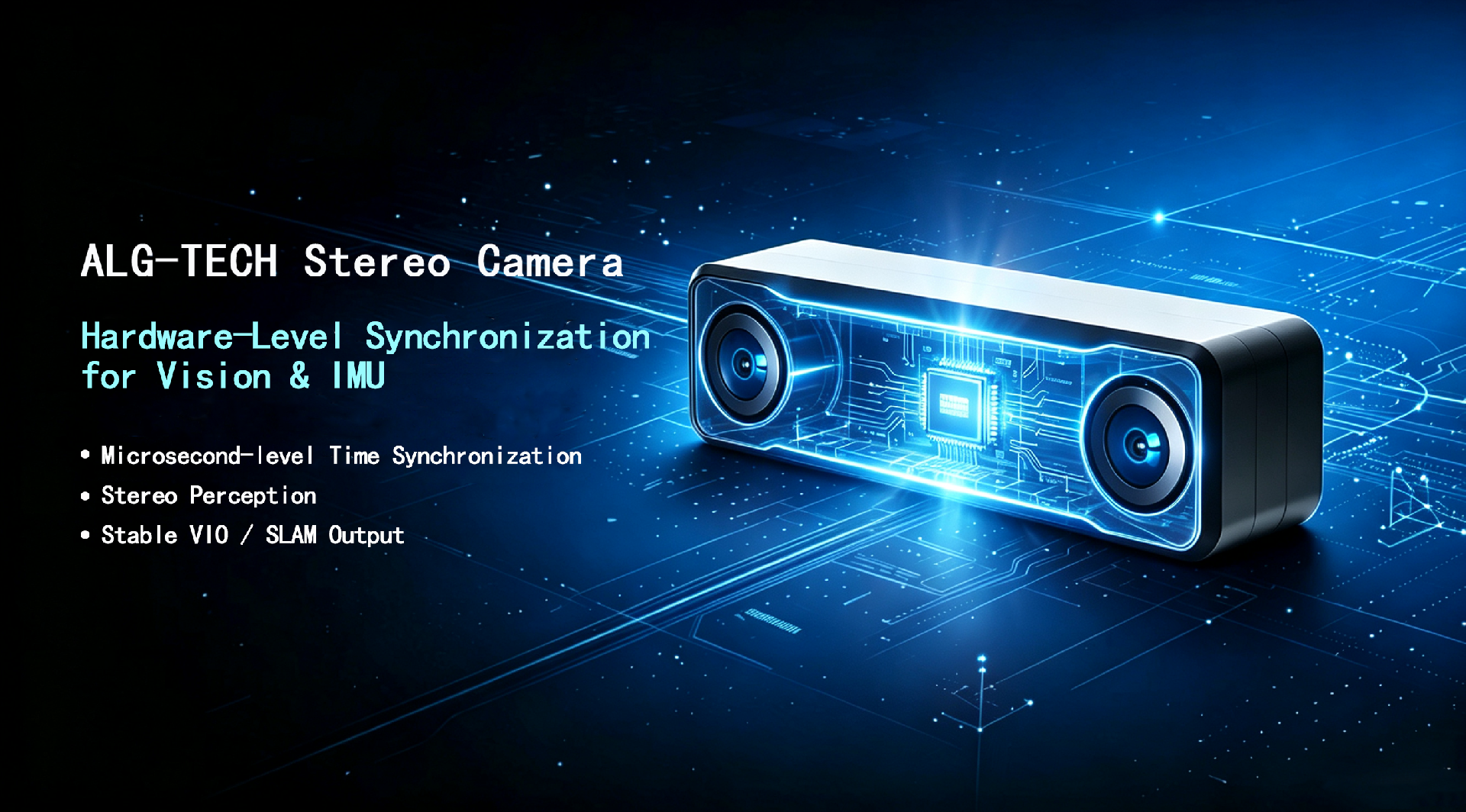
ALG-TECH stereo cameras deliver hardware-level synchronization between vision and IMU, resolving frame-rate and timing pain points and laying a solid foundation for reliable robot positioning, navigation and environmental perception.
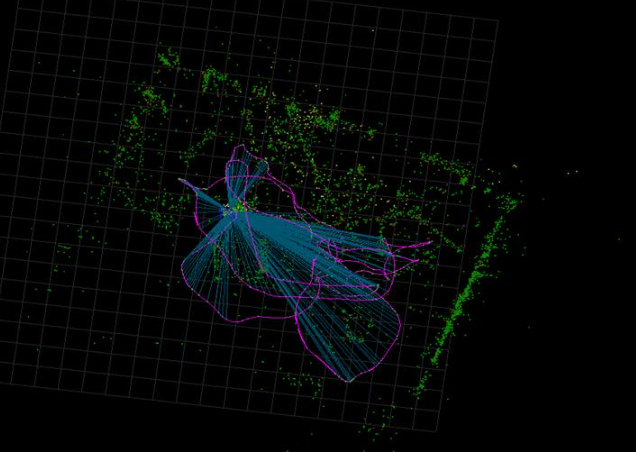
Figure source: Internet, for illustration only.
1. What are VIO and SLAM
SLAM (Simultaneous Localization and Mapping) is the core technology for robot autonomous navigation. VIO (Visual-Inertial Odometry) serves as the front-end core of SLAM. It fuses two complementary sensor modalities to realize high-stability robot perception and positioning.
Vision (Camera): Estimates camera motion trajectories by matching feature points across successive image frames. It delivers high positioning accuracy and complete environmental structure reconstruction. However, it is limited by fixed frame rates and easily loses feature points due to motion blur during high-speed robot movement.
IMU (Inertial Measurement Unit): Collects acceleration and angular velocity data at a high frequency of 200-1000Hz, making up for motion estimation gaps between image frames. It features high sampling frequency and zero impact from light changes. The main limitation is cumulative data drift, which cannot support long-term independent positioning operation.
The efficient collaboration of vision cameras and IMU constitutes the core head perception architecture of embodied intelligent robots, which determines the overall positioning and navigation performance of robots.
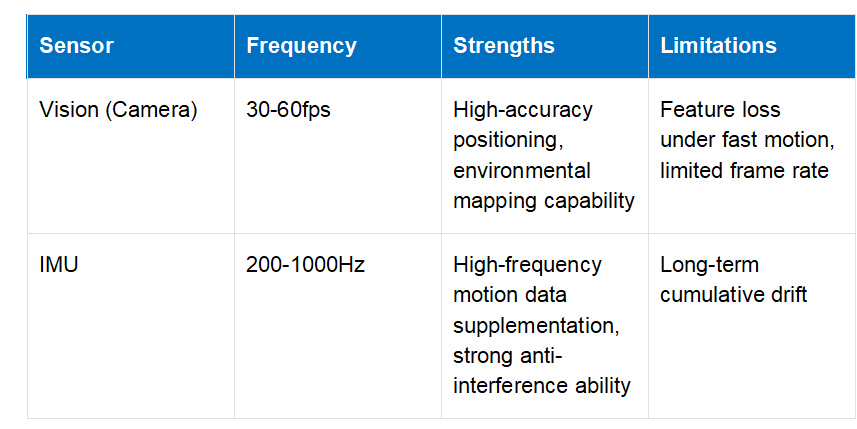
Essentially, the VIO/SLAM fusion algorithm realizes temporal data alignment and real-time state estimation. Accurate physical timestamps of all sensor data are the prerequisite for effective data fusion and high-precision positioning.
2. Core Industry Pain Points: Unmatched Frame Rate and Inconsistent Time Reference
Pain Point 1: Uneven Relocalization Efficiency Caused by Frame Rate Mismatch
Vision cameras generally operate at 30-60fps, while IMU works at a high frequency up to 1000Hz. The two sensors generate data according to their independent clock cycles. When the fusion algorithm processes a single image frame, it needs to match IMU data at the corresponding timestamp. The huge frequency difference leads to unbalanced data volume in the fusion time window, resulting in unstable positioning output.
Pain Point 2: Uncertain Time Deviation from Disunified Time Base
The delay from sensor physical sampling to data reception by the fusion algorithm is not fixed. Vision sensors and IMU adopt independent time bases without unified calibration, resulting in random time offsets between dual-source data and seriously affecting fusion accuracy.
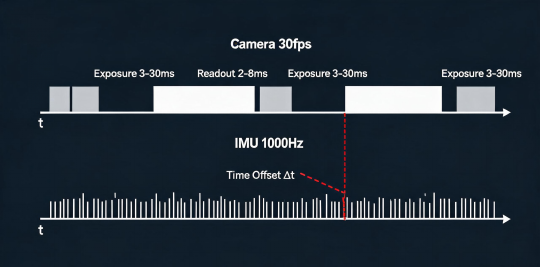
Figure: Time base offset (Δt) between 30fps camera and 1000Hz IMU
3. Root Causes of Timing Deviation
3.1 Internal Delay
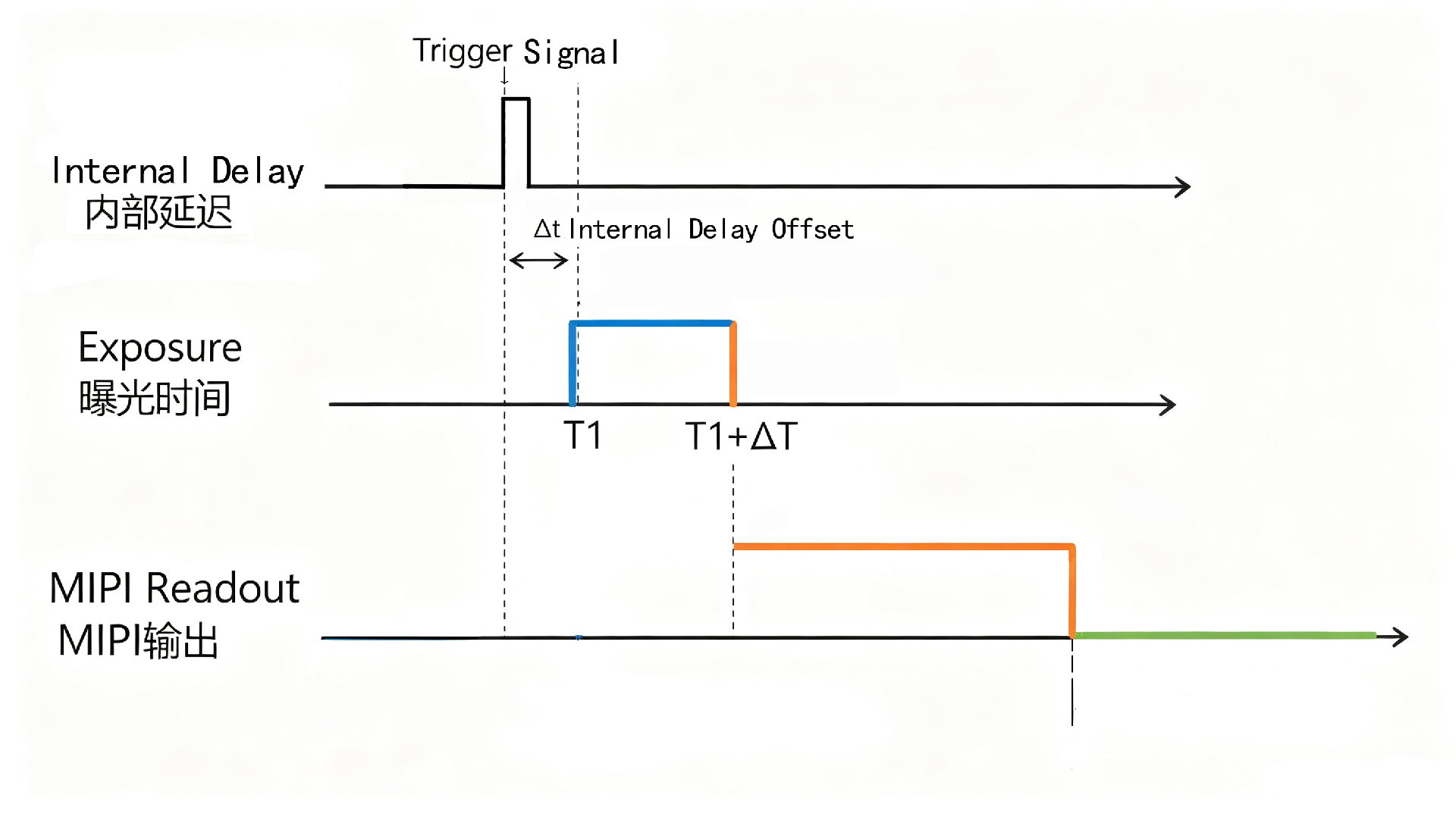
Internal delay refers to the interval between the external trigger signal reaching the sensor and the actual start of exposure, which is determined by sensor configuration parameters. The system marks the timestamp according to the trigger signal time, while the real exposure time lags behind, causing misalignment between the recorded image timestamp and the actual sampling time and generating vision-IMU timing deviation.
3.2 Exposure Time
Camera image acquisition relies on sensor exposure. Global shutter sensors complete full-pixel exposure simultaneously with an exposure time of 3-30ms (adjustable according to light and frame rate). Rolling shutter sensors expose pixels row by row, bringing additional row time difference.
The core problem is that the host computer’s image timestamp is based on frame reception time, not the actual exposure center time. The image data timestamp is always systematically delayed, with the delay equal to exposure time plus subsequent processing latency.
3.3 MIPI Readout Latency
After exposure, pixel data is transmitted serially through the MIPI CSI interface. For a 1280×800 resolution image transmitted via dual lanes, the total readout latency is 2-8ms (varies with MIPI clock frequency and pixel bit width). This transmission delay further widens the gap between physical sampling time and host data reception time.
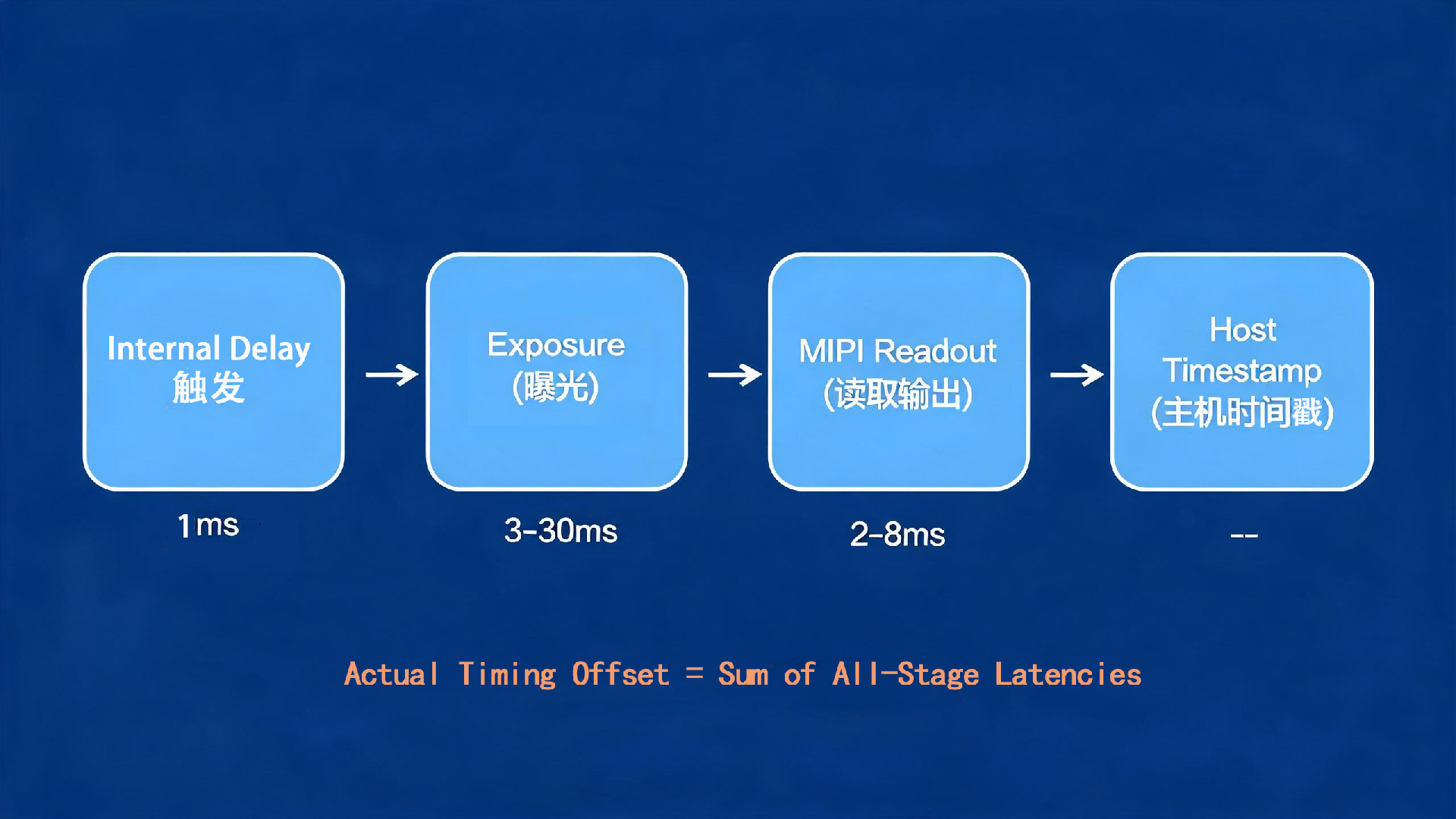
Camera Data Link Latency Sequence: Trigger → Exposure → MIPI Readout → Host Timestamping
4. ALG-TECH Stereo Camera: Fundamental Solution to Time Synchronization
4.1 Precise IMU and Exposure Position Alignment
ALG-TECH head-mounted stereo cameras realize ultra-high precision alignment between IMU sampling time and camera exposure time. By analyzing the sensor’s working timing sequence, we accurately capture the real exposure center time of images, compensate for timing errors caused by sensor internal delay, and achieve high-precision time synchronization between vision and IMU data to support high-stability VIO fusion positioning.
The stereo camera collects environmental visual information, while the IMU outputs the robot’s angular velocity and acceleration motion data. Our product realizes high-precision physical matching between IMU sampling points and camera exposure moments, ensuring that each frame of environmental image corresponds to the robot’s real-time motion state. It completely eliminates fusion errors caused by sensor installation offset and sampling misalignment from the data source, building a solid hardware foundation for high-precision VIO/SLAM positioning and navigation.
4.2 Unified Time Base Calibration
Based on precise exposure alignment, ALG-TECH further completes unified time base calibration for all sensors. Relying on exclusive hardware-level synchronization mechanism, visual perception data and robot motion data are fused in a unified time dimension. This greatly reduces positioning drift caused by asynchronous data, and outputs stable and reliable fusion perception data for robot environmental perception, autonomous navigation and intelligent operation.
In addition, ALG-TECH provides a full-featured cross-platform SDK development kit. It is compatible with mainstream hardware platforms such as X86 and ARM, and supports standard development environments and drivers including V4L2 and ROS. It effectively reduces the integration difficulty and secondary development cost for robot developers.
In the future, ALG-TECH will continue to focus on underlying visual perception technology research and development. We will cooperate deeply with upstream and downstream partners in the industrial chain to accelerate the large-scale commercial application of high-performance intelligent robots worldwide.